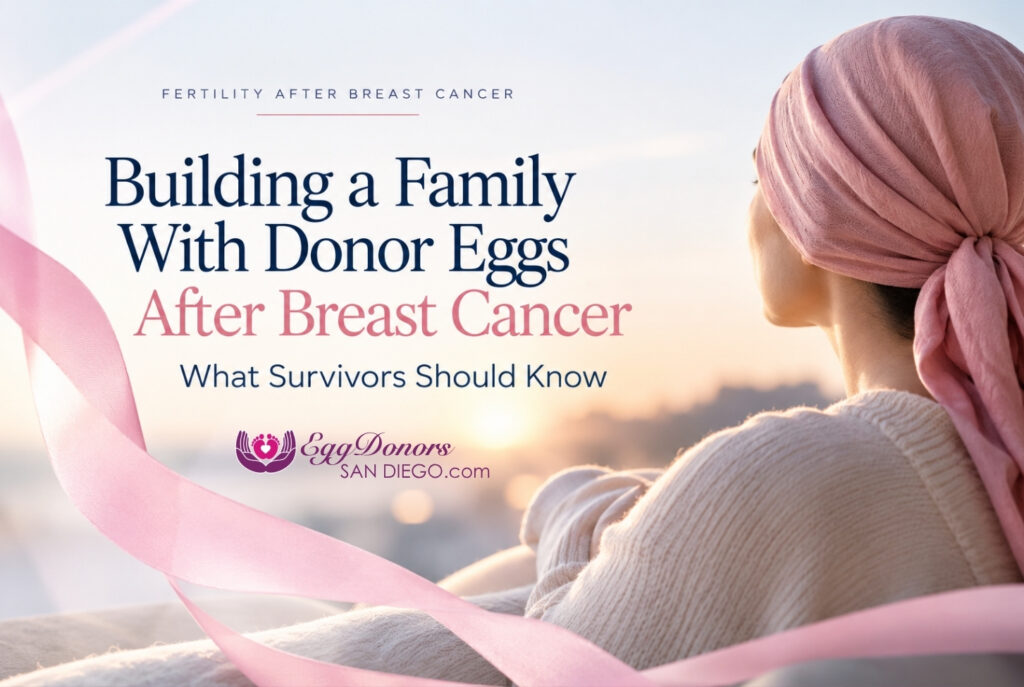
For many breast cancer survivors, completing treatment marks the beginning of a new chapter. For those who hope to become parents, that chapter may also bring questions about fertility, pregnancy, and whether cancer treatment has changed the path to building a family.
The important point is that fertility after breast cancer is highly individual. Some survivors may be able to conceive using their own eggs. Others may have eggs or embryos frozen before treatment. For some, donor eggs after breast cancer may become an appropriate family-building option.
The path should not begin with an assumption about which treatment is necessary. It begins with understanding your current reproductive health.
“After breast cancer, fertility care should be individualized. We need to understand what treatment a patient received, evaluate her reproductive function today, consider any fertility preservation completed before treatment, and coordinate pregnancy planning with her medical team.”
Dr. Minoos Hosseinzadeh
How Can Breast Cancer Treatment Affect Fertility?
Breast cancer itself does not necessarily mean infertility. However, certain cancer treatments can affect ovarian function and reproductive potential.
Chemotherapy can reduce the number of remaining eggs in the ovaries. The degree of impact varies according to factors including the medications and doses received, age at treatment, and ovarian reserve before therapy.
Some patients may experience premature ovarian insufficiency, while others retain ovarian activity but have a substantially diminished ovarian reserve. Menstrual periods may also return after chemotherapy without necessarily providing a complete picture of reproductive potential.
Age remains important as well. A survivor treated at 27 may face a different reproductive situation from someone completing treatment at 39. This is why fertility treatment after chemotherapy for breast cancer requires individualized assessment rather than assumptions based solely on whether menstrual cycles have returned.
Can I Have a Baby After Breast Cancer?
Many breast cancer survivors may be able to pursue pregnancy after treatment. Research to date has generally not found pregnancy after breast cancer to worsen cancer outcomes, but individual circumstances vary, and pregnancy timing should be discussed with the oncology team.
The first step in family building after breast cancer is usually to establish what reproductive options remain available.
A fertility evaluation may consider:
- Ovarian reserve
- Age and menstrual history
- Previous cancer treatments
- Reproductive history
- Previous fertility treatments
- Eggs or embryos preserved before cancer treatment
- Current medications and overall health
- Individual family-building goals
From there, possible pathways may include attempting pregnancy without fertility treatment, IVF using the patient’s own eggs, using previously frozen eggs or embryos, donor egg IVF, or creating embryos for transfer to a gestational carrier when carrying a pregnancy is not medically recommended.
What If Eggs or Embryos Were Frozen Before Cancer Treatment?
Some patients complete fertility preservation before chemotherapy or other cancer treatment. This may include egg freezing or embryo freezing.
If you have cryopreserved eggs or embryos, those should be part of your fertility discussion before assuming donor eggs are necessary.
Previously frozen reproductive material may provide an important path to parenthood for some survivors. The availability of frozen eggs or embryos, their number, and other clinical considerations can be evaluated as part of post-treatment fertility planning.
Donor eggs should therefore be viewed as one possible family-building pathway, not as a replacement for reproductive material that was preserved before cancer treatment and may remain available for use.
Why Might Donor Eggs Be Considered After Breast Cancer?
Donor eggs after breast cancer may be considered when a fertility evaluation indicates that using a patient’s own eggs is unlikely to provide a practical reproductive pathway.
Potential circumstances can include:
- Significantly diminished ovarian reserve following cancer treatment
- Premature ovarian insufficiency or treatment-related early menopause
- Difficulty obtaining viable eggs after treatment
- Age-related changes in reproductive potential
- Previous unsuccessful fertility treatment
- Absence of previously frozen eggs or embryos
- Other circumstances in which using the patient’s own eggs is no longer considered an appropriate treatment pathway
None of these circumstances automatically means donor eggs are necessary. The decision should follow an individualized fertility evaluation.
“The question is not simply whether someone has had chemotherapy. We look at the complete reproductive picture and then discuss which family-building options are medically appropriate for that individual.”
Dr. Minoos Hosseinzadeh
Using Donor Eggs and Carrying a Pregnancy Are Two Different Questions
This is one of the most important distinctions for breast cancer survivors exploring fertility treatment.
Donor eggs address the source of the egg. They do not determine whether a survivor can or should carry a pregnancy.
A patient may be an appropriate candidate for donor egg IVF after breast cancer while still requiring a separate medical assessment and coordination with her oncology team before attempting pregnancy.
Pregnancy planning can depend on cancer characteristics, treatments received, medications still being taken, overall health, and the recommended timing following treatment.
For example, some breast cancer survivors may be receiving ongoing endocrine therapy. Decisions about treatment duration, interruption, or pregnancy timing require individualized discussion with the physicians managing the patient’s cancer care. Cancer medication should not be discontinued for the purpose of attempting pregnancy without guidance from the treating medical team.
Depending on individual circumstances, pregnancy planning may involve coordination among a reproductive endocrinologist, oncologist, and maternal-fetal medicine specialist.
What If Carrying a Pregnancy Is Not Recommended?
The source of the egg and the ability to carry a pregnancy remain separate considerations.
If carrying a pregnancy is not medically recommended, some intended parents may explore creating embryos with donor eggs for transfer to a gestational carrier, depending on their individual medical circumstances and applicable legal requirements.
This creates another potential family-building pathway without changing the fundamental purpose of donor eggs: providing an egg source for embryo creation.
The appropriate approach should be determined individually and in coordination with the relevant medical professionals.
How Does Fresh Donor Egg IVF Work After Breast Cancer?
When donor eggs are determined to be an appropriate option, the process moves from fertility assessment to donor selection and individualized cycle planning.
At EggDonorsSanDiego.com, our in-house program focuses on fresh donor eggs.
The process generally includes:
- Donor selection based on the intended parents’ priorities
- Medical and genetic screening of the egg donor
- Individualized cycle planning
- Legal Clearance
- Ovarian stimulation and monitoring of the donor
- Egg retrieval
- Fertilization and embryo creation
- Embryo development and cryopreservation
- Planning for embryo transfer
For breast cancer survivors, the reproductive plan may also incorporate recommendations from the oncology team before embryo transfer is considered.
This allows the donor egg process to become part of a broader, individualized post-cancer family-building plan rather than being treated as an isolated fertility procedure.
Choosing an Egg Donor After Breast Cancer
Choosing an egg donor can feel different after cancer.
Survivors have already navigated complex medical decisions, often involving uncertainty and major changes to plans they once took for granted. Selecting a donor can therefore carry both practical and emotional considerations.
Intended parents may consider a donor’s:
- Medical history
- Genetic screening
- Family health history
- Physical characteristics
- Educational or personal background
- Other characteristics that are personally meaningful to them
The goal of egg donor matching is not to find a “perfect” person. It is to identify an appropriately screened donor who fits the intended parents’ priorities while establishing a medically responsible treatment plan.
Do I Need Medical Clearance Before Pregnancy After Breast Cancer?
Pregnancy planning after breast cancer commonly involves communication with the oncology team, but there is no single timeline that applies to every survivor.
Recommendations can differ according to cancer characteristics, treatment history, current medications, overall health, age, and individual clinical circumstances.
Certain cancer medications may also be incompatible with pregnancy. This makes it particularly important not to discontinue cancer treatment or begin attempting pregnancy without guidance from the physicians managing your care.
For some patients, additional consultation with a maternal-fetal medicine specialist may also be appropriate before pregnancy.
The objective is not simply to obtain a yes-or-no “clearance.” It is to develop an individualized pregnancy plan that accounts for both reproductive goals and the survivor’s broader medical history.
A Different Path Does Not Mean the End of the Path
Breast cancer treatment may change reproductive function, but it does not create one predetermined fertility outcome.
For some survivors, previously frozen eggs or embryos may provide a path forward. Others may still be able to pursue treatment using their own eggs.
For patients affected by cancer-related infertility, diminished ovarian reserve, premature ovarian insufficiency, or other reproductive changes following treatment, donor eggs for breast cancer survivors may offer another possibility.
The objective is not simply to pursue fertility treatment. It is to determine which pathway makes sense medically, reproductively, and personally.
Frequently Asked Questions
Can breast cancer survivors use donor eggs?
Yes. Donor eggs can be a family-building option for some breast cancer survivors. A fertility evaluation can help determine whether donor eggs are appropriate, while the oncology team can provide guidance regarding pregnancy planning and timing.
Does chemotherapy affect ovarian reserve?
Some chemotherapy treatments can reduce the number of eggs remaining in the ovaries and may cause temporary or permanent changes in ovarian function. The effect varies considerably among individuals.
Can I use donor eggs if chemotherapy caused early menopause?
Potentially. Donor egg IVF after breast cancer may be considered when treatment has resulted in premature ovarian insufficiency or loss of usable ovarian function. The ability to carry a pregnancy should be assessed separately.
Can I use frozen eggs or embryos from before cancer treatment?
Potentially, yes. If eggs or embryos were cryopreserved before treatment, they should be reviewed as part of post-cancer fertility planning before deciding whether donor eggs are necessary.
Can I carry a pregnancy after breast cancer?
Many survivors may be able to pursue pregnancy after breast cancer treatment. Individual circumstances vary, however, so pregnancy timing and medical considerations should be discussed with the oncology and fertility teams.
Can someone else carry an embryo created with donor eggs?
Potentially. When carrying a pregnancy is not medically recommended, some intended parents may explore creating embryos using donor eggs for transfer to a gestational carrier. Medical and legal considerations should be evaluated individually.
Where can breast cancer survivors pursue donor egg IVF in San Diego?
EggDonorsSanDiego.com provides an in-house fresh egg donor program in San Diego under the care of Dr. Minoos Hosseinzadeh. Treatment planning is individualized according to each intended parent’s reproductive and medical circumstances.
Take the Next Step When You Are Ready
Surviving breast cancer can reshape how you think about your health, your future, and parenthood. Fertility care after cancer should recognize that history rather than reducing it to a single treatment recommendation.
At EggDonorsSanDiego.com, Dr. Minoos Hosseinzadeh works with intended parents to evaluate their reproductive options and, when donor eggs are appropriate, develop an individualized fresh donor egg IVF plan.
If you’re ready to start your egg donation journey, click here.